
New Pilot | New Safety Problems
2023 marks the debut of a new generation of the Honda Pilot. The previous generation had multiple safety issues. Was Honda able to solve them in this new version? Let’s find out as we watch the new Pilot undergo the world’s most demanding crash tests.
Updated Moderate Overlap Crash Test
Let’s start with the updated Moderate Overlap test, which has a crash test dummy in the rear seat. The old Pilot really struggled in this test, scoring the lowest rating of poor. The new one, unfortunately, doesn’t do much better.
The rear-seat restraint system does a terrible job of keeping passengers safe. The lap portion of the seatbelt dangerously shifted from the pelvis, where it should remain throughout the crash, to the abdomen. The rear passenger’s head also approached the front seat back. Rebound movement was uncontrolled as the dummy shifted out of its seat (pictured below). The rear seat dummy also recorded a moderate risk of injuries to the head or neck.
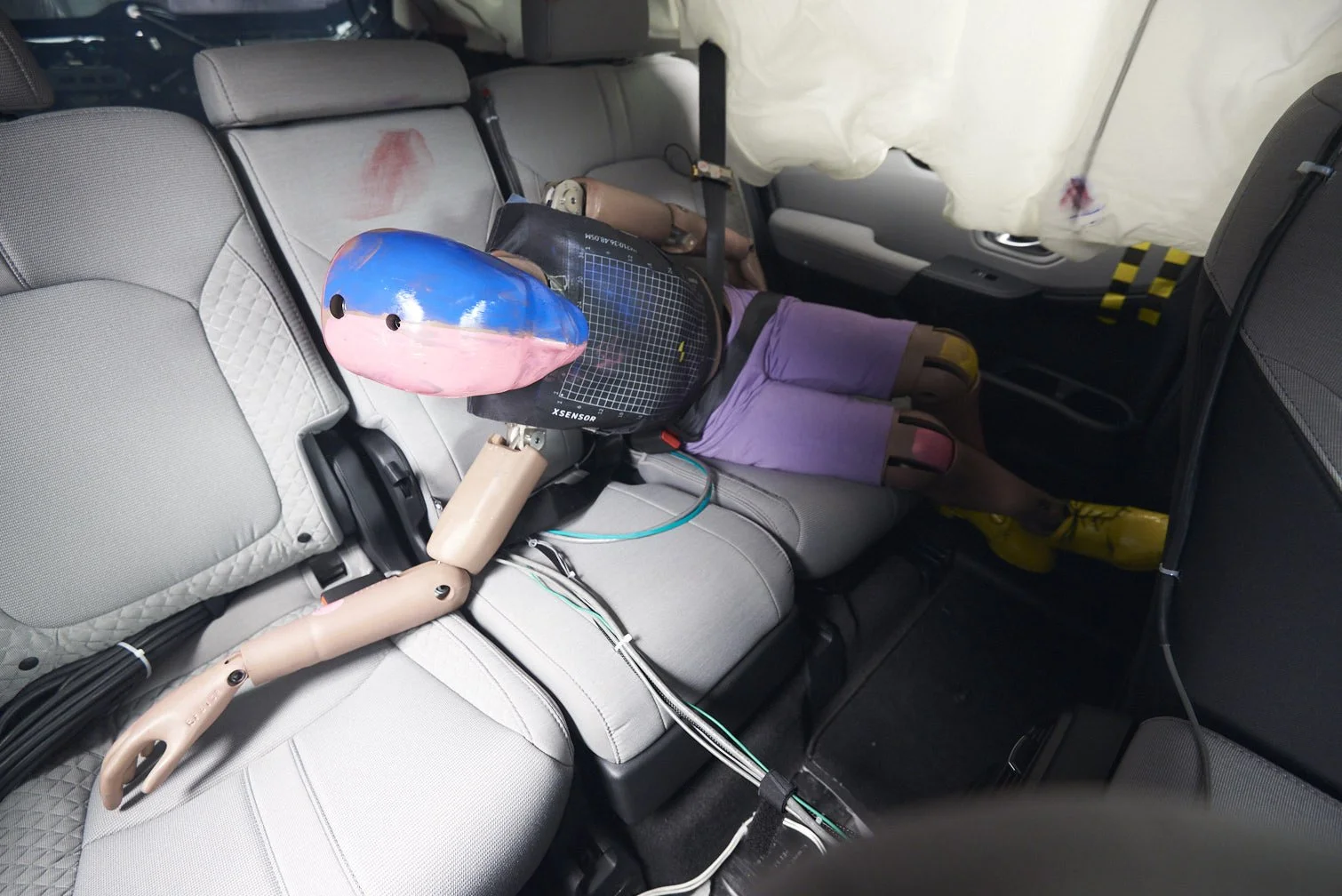
The Honda Pilot’s rear-seat restraint system does a terrible job in the updated moderate overlap crash test.
In all, the Pilot scored the second lowest rating of Marginal in this evaluation. It’s quite disappointing that Honda wasn’t able to do better after a full redesign.
Updated Side Impact Crash Test
Next up is the updated side impact test. This evaluation recreates what would happen if the Pilot was struck on its side by a 4,200 truck at 37 miles per hour.
The old Pilot did poorly in this test, experiencing significant intrusion.
Fortunately, the new one performed extremely well. The Pilot’s structure had among the lowest amount of intrusion we have ever seen in this evaluation. The space between the B-Pillar and seat center-line is a phenomenal 32 cm. All injury measures are low and dummy movement is well controlled. This stellar performance earns the Pilot the highest rating of Good in this test.
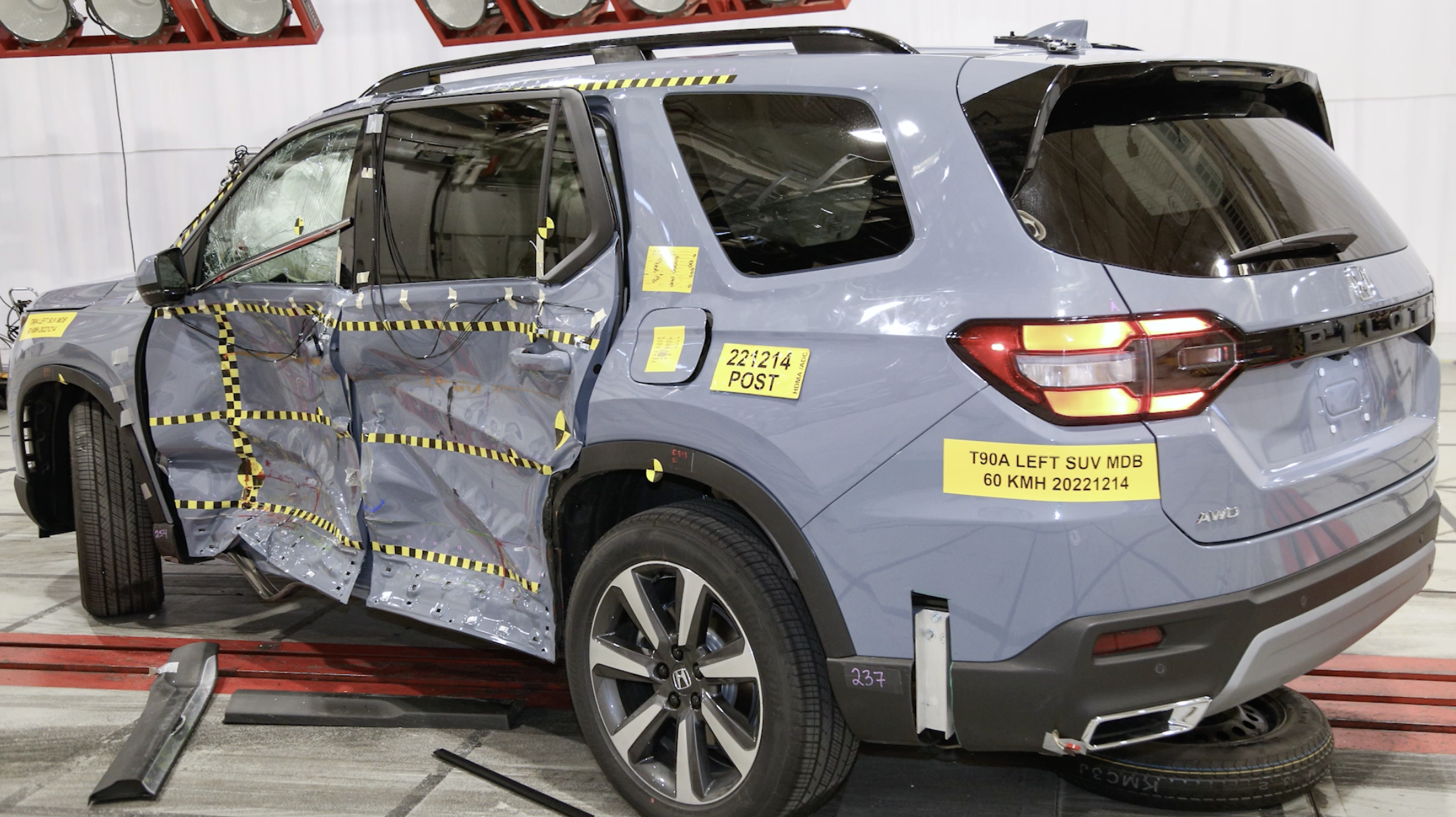
The Honda Pilot’s structure holds up very well in the updated side-impact crash test.
Small Overlap Crash Test (Driver and Passenger)
Let’s move onto the small overlap crash test.
With only 25% of the Pilot’s front end striking the barrier, this test concentrates the crash forces and really challenges the vehicle’s crumple zones and structure.
The Pilot performed very well in this evaluation on both the driver and passenger sides. The structure held up well and had low intrusion numbers. All injury measures were low.
The seat belts and air bags also do a good job of ensuring dummy movement is well controlled on both the driver and passenger sides.
Honda did a great job in this evaluation and earns the highest score of Good on both the driver and passenger sides.
Crash Prevention, Vehicle to Pedestrian
Of course, the best crash protection system is one that can help avoid a collision all together.
An Automatic Emergency Braking system uses cameras or sensors to detect an imminent collision and autonomously applies the brakes.
The Pilot was tested in its abilities to avoid collisions with pedestrians in both day and night conditions at speeds up to 37 miles per hour. We can assume that if the vehicle stops for pedestrians, it will also stop for vehicles which are larger and easier for the system to detect.
During the daytime test, the vehicle performed well and autonomously stopped in most conditions.
The Pilot also did well in the night time pedestrian avoidance test; autonomously stopping or significantly slowing in all scenarios. It’s worth noting that the best night time performance occurred when the high beams were activated, which reinforces the importance of using high beams whenever they don’t interfere with other drivers.
Headlights
Speaking of night time safety, let's now evaluate the performance of the headlights.
The Pilot only has one type of headlights and it does well.
The low and high beams do well in most of the straightaway and curve scenarios. The low beams fall a little short on one of the left curves, but this is mitigated by automatic high beams that fill the gap.
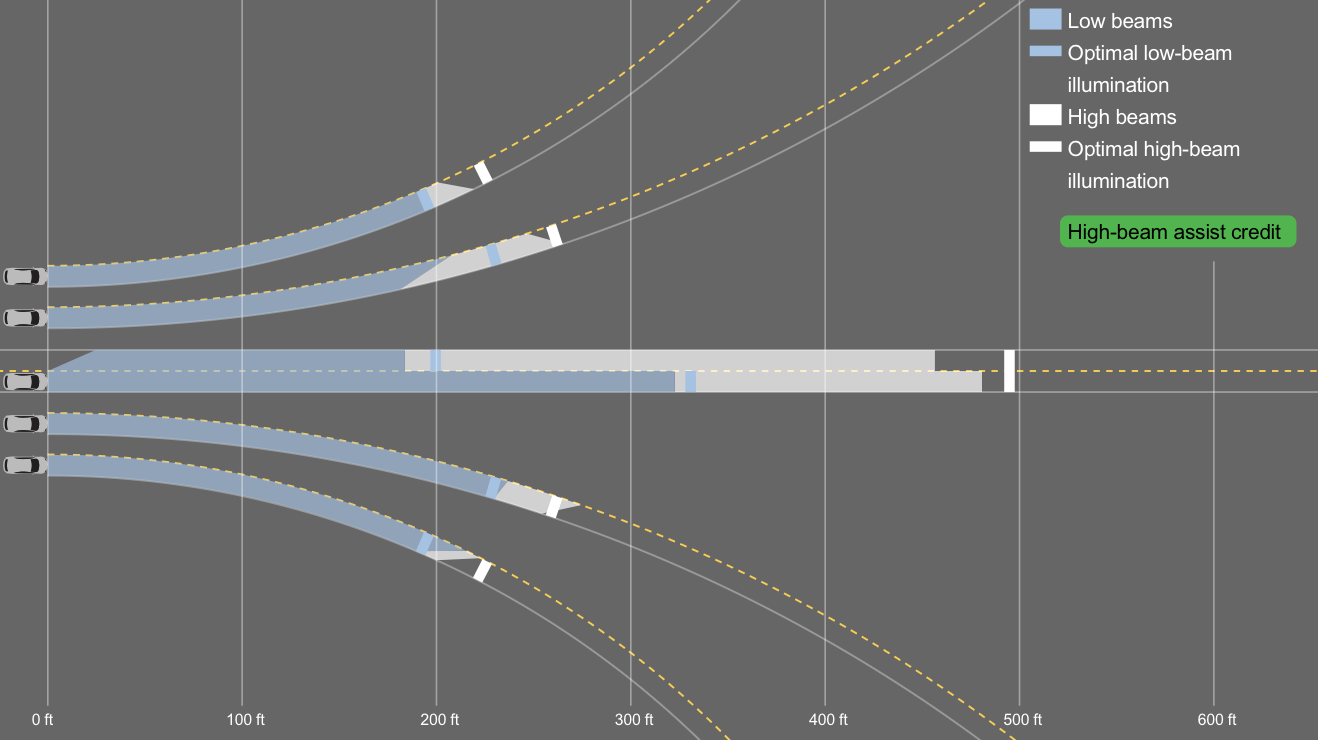
Headlight evaluation of the 2023+ Honda Pilot.
Conclusion and Recommendation
Overall, the Pilot is a mixed bag of safety performance. It did very well in the small overlap and updated side impact crash tests. It has an excellent automatic emergency braking system and good headlights.
Unfortunately, the Pilot struggled in the updated moderate overlap test. The rear-seat dummy’s movement was poorly controlled. If it wasn’t for this one underperforming test, the Pilot would be one of the safest options in the midsize SUV segment. Hopefully, Honda makes the necessary improvements.
In the meantime, the Subaru Ascent makes a very safe option in this class.
Images courtesy of the Insurance Institute for Highway Safety (IIHS) and Honda.